

Most org models fail because they turn work into jargon, then call the mess a transformation.
If you’re a leader or change-maker, you’ve probably got a graveyard of failed frameworks and org designs behind you. The scaling model that needed a 500-page manual. The organizational change model that only transformed cash into catastrophe. The agile framework rollout that made everyone busy and nobody happy. You want something that could actually work, not just another method.
What’s fascinating is that the people building agentic AI systems right now are reinventing a model a systems thinker published in 1972, and that management shrugged off as too complicated. He was right all along, just 50 years early.
It can be such a joy to start all over. For some, it’s a new relationship, a new country, a new house, or a new job. For others, it’s a new pair of glasses that makes all the difference. We get a different perspective and a new view of the world, letting us update our mental models.
For me, it’s an updated organizational model.
In this article, I describe my new approach to diagnosing teams, departments, and organizations, from the smallest one-person business to the largest multinational enterprise. This new perspective, which I’ve been tweaking and tuning for months, helps me diagnose and improve operational models for organizations of any size.
Check out my new blueprint for the networked agentic organization:
The Importance of Simplicity
People often credit Albert Einstein with the famous words:
“Make everything as simple as possible, but not simpler.”
It’s rather ironic because what he actually said was:
“It can scarcely be denied that the supreme goal of all theory is to make the irreducible basic elements as simple and as few as possible without having to surrender the adequate representation of a single datum of experience.”
He could have said that in a simpler way.
The point remains valid, though. Too many products and services look bloated and overly complicated. Some agile scaling frameworks and organization design approaches require 500-page books and multi-day courses just to explain the basics. (Yes, I may have contributed to that problem as well.) But no product ever succeeds when people perceive it as too complicated. For humans to change behaviors, the guidance must be simple.
“A complex system that works is invariably found to have evolved from a simple system that worked. A complex system designed from scratch never works and cannot be patched up to make it work. You have to start over with a working simple system.”
― John Gall, The Systems Bible: The Beginner’s Guide to Systems Large and Small
I’m going to start over with a simple system.
The Relevance of Artistry
A famous practitioner of simplicity was Dick Bruna, the Dutch artist behind the cute little rabbit called Miffy (in Dutch: Nijntje). Bruna’s artistic philosophy was to use as few lines as possible (and a minimum number of colors) without losing the essence of the characters and their stories. He drew Miffy as simple as he could, but not simpler.

In the world of products, the most-cited masters of radical product simplicity include Steve Jobs (Apple), Larry Page and Sergey Brin (Google’s early days), the leadership of IKEA, and James Dyson. They all shared Dick Bruna’s obsession with removing all clutter and stripping down their products until they were left with only the most essential features.
Simplicity is an art. It takes a lot of talent and tremendous discipline to figure out how to reduce something to its bare essentials. Many get this completely wrong because few product designers are artists.
Piet Mondrian was another famous Dutch artist who perfected the art of simplicity. He explicitly aimed to abstract away everything until he arrived at the fundamental quality of objects. Design historians argue that Mondrian’s minimalist forms and colors influenced the entire modern profession of industrial design.
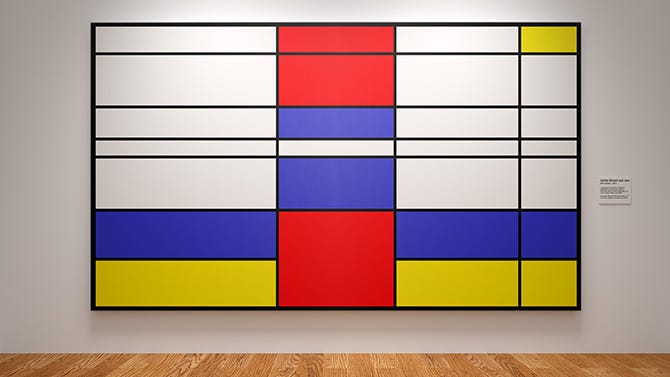
It’s this same philosophy of simplicity that I aim for with my new organizational model. I try to follow in the footsteps of some of the greatest masters in Dutch design and hope I can develop and muster even just a fraction of their talent and discipline.
Let’s start.
Entity: The System in Focus
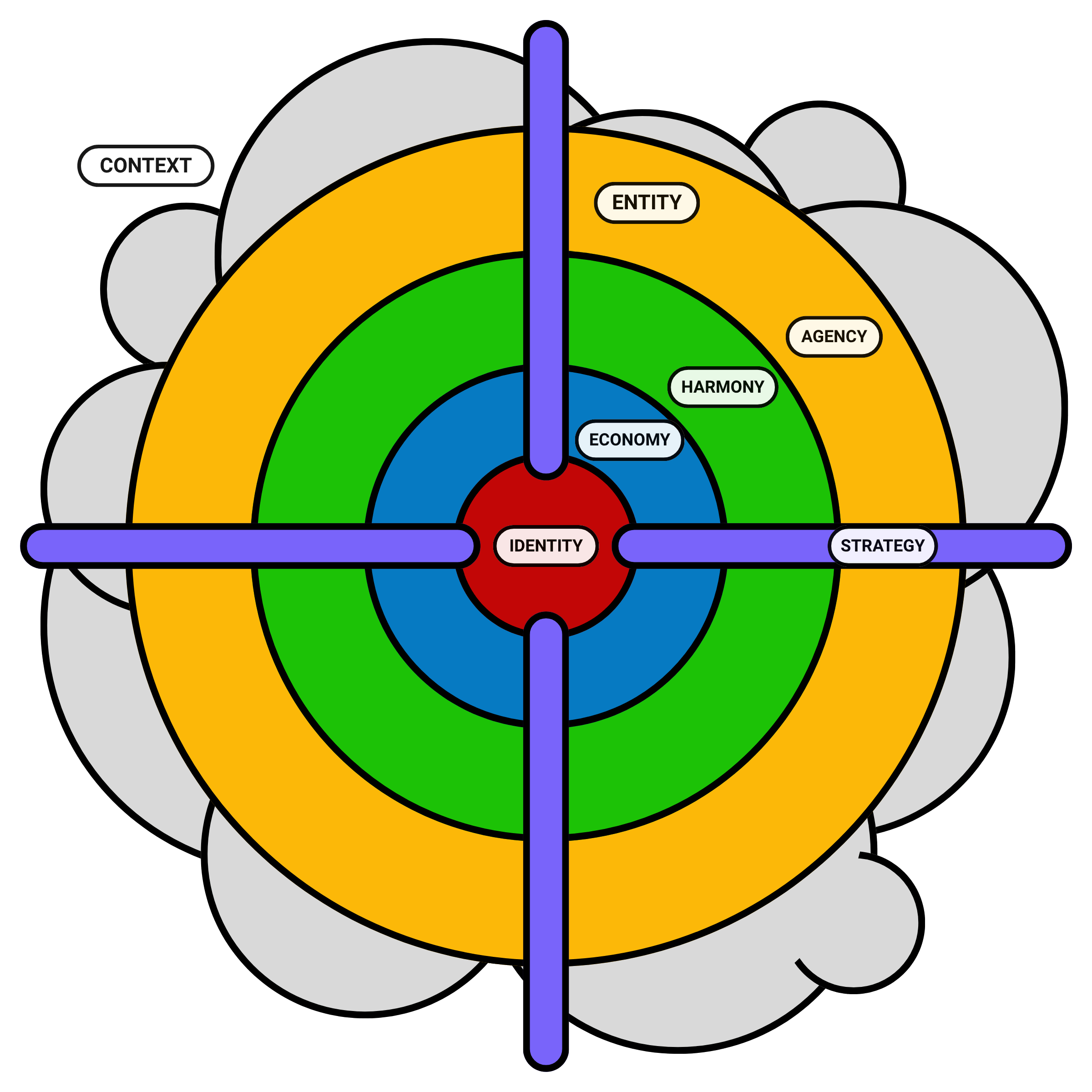
We begin with the primary unit that we want to diagnose and discuss in an organizational setting: the entity. This could be a team, a business unit, one employee or AI agent, or a global multinational corporation spanning several continents. The scale doesn’t matter for now. What matters is that we distinguish between what’s part of the entity and what is not, which means there is a boundary.
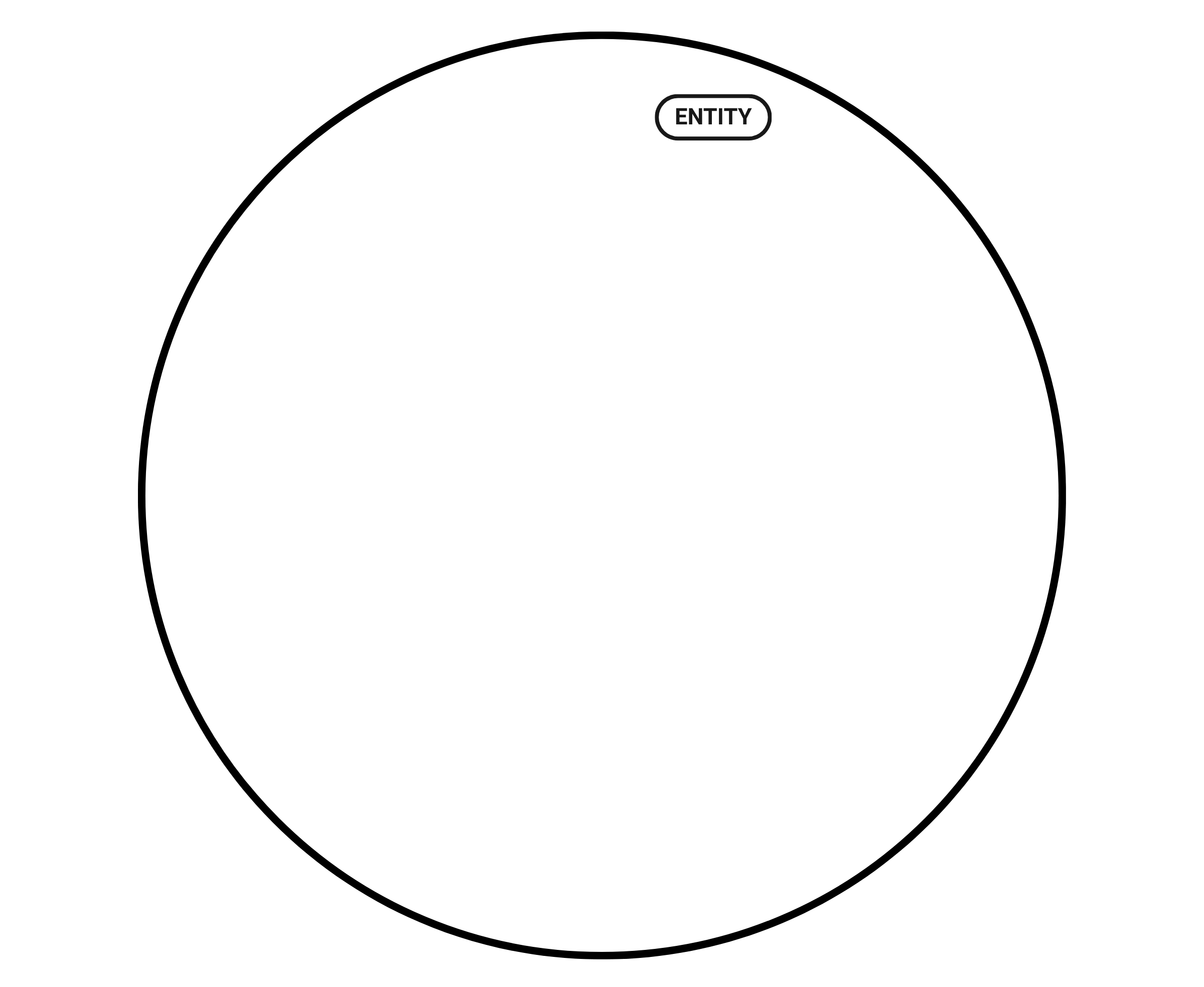
Some experts prefer to speak of a system, or unit, or some other smart-ass systems thinking term. That’s fine with me. I like the word entity because in common parlance an entity is a distinguishable “thing” with some persistence and state (e.g., a person, team, organization, or country). It can be physical or abstract, but you can name it and say, “This one versus that one.” By default, every entity is a system because it always has various interacting parts.
Note: The entity’s boundary should be blurry because the exact border is up for debate and depends on the observer. It’s hard to tell at which point a team’s cohesion ends and its environment begins. And to be honest, my earlier version did show a cloudy border. But circling back to Dick Bruna, I think the artist would have wagged his finger and said, “The blurriness of that thing is not essential. Remove it! Miffy’s fur doesn’t look fuzzy either.” And so I deleted the blur.
What we have is a system, its environment, and the boundary between them.
Context: The Environment’s Niches
Each entity lives in an environment full of context. An employee has to deal with meetings, teams, projects, and clients. A corporation tries to handle labor, supplies, markets, investors, and government regulations. And an AI agent must somehow make sense of users, tools, and protocols.
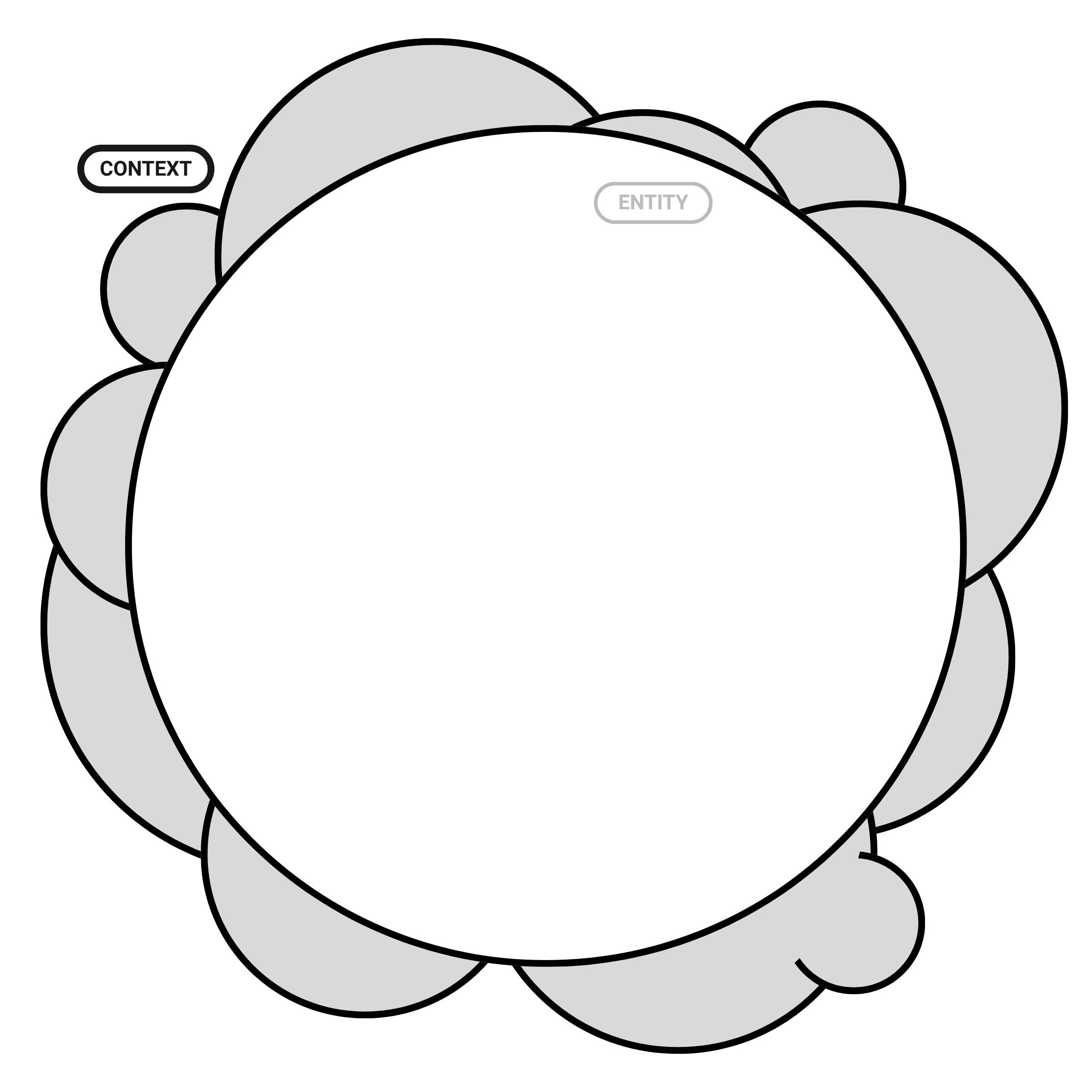
The number of contexts, which together form the environment, is limitless. And while we might objectively agree on the existence of an environment, the contexts depend on the perspective of the entity.
It is the mother who decides that her relevant contexts are two kids, a husband, her job, her home, the gym, a charity organization, and her favorite TV shows on Netflix. It is the football team agreeing that their relevant contexts are their coach, club, fans, and the media. It is I who switches every day between the contexts of writing, speaking, coaching, reading, drawing, and cooking.
Again, my earlier design was too complicated: I had visualized different contexts as multiple overlapping translucent circles. But then I felt the ghost of Steve Jobs tsk-tsk-ing over my shoulder, and I reduced the contexts to a simple cloud that I could have copied straight out of a Miffy story.
Some theoretical thinkers refer to such a subjective part of the environment as a niche, and I am perfectly okay with using that term instead of context. However, in the age of AI, the word context has won out: context is the information and mental model we have about a defined part of the environment.
Agency: Operation of the Value Streams
To survive and thrive in its various contexts or niches, the entity needs to have a function that I will refer to as agency. It is the autonomous potential to handle requests and demands from the environment, to get what it needs as input and to deliver what the environment wants as output. Many readers will immediately think of value streams, and they would be correct that the agency function’s primary work is generating enough value for stakeholders in all contexts.
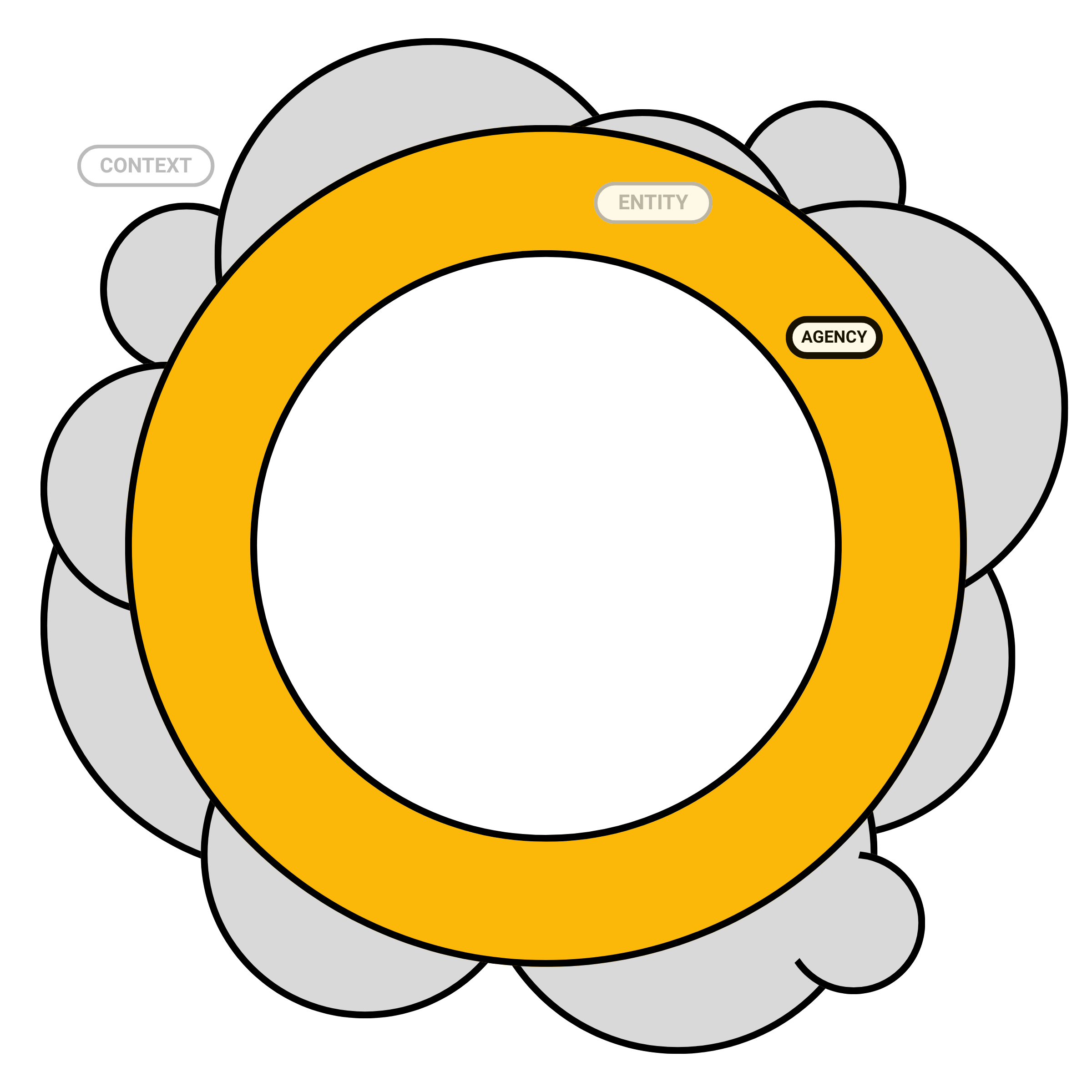
We may alternatively refer to this as operations, service, or delivery. The agency function is where a Scrum team takes its customer through a demo session. It is the Finance department paying the invoice of a supplier. It’s the AI support agent that issues a refund. And it is the Substack author clicking on the Publish button to send out another newsletter to his subscribers.
In my visual design, agency is the main part of the entity that directly touches the environment. I don’t show it at the bottom of a hierarchy, and I won’t depict it as a linear flow from left to right. (We’ll have those discussions some other time.) For now, the main thing is that the agency function is the main part that acts on the present environment. It is also the largest of the five functions. That’s all that matters. (I feel James Dyson nodding in approval.)
I like the word agency because we associate the term with the autonomy we need to respond to our environment with the shortest possible feedback cycles. For example, the customer service agent who cannot compensate a customer for an order gone wrong without written permission from the head office is an agent in name only, because what he clearly lacks is agency.
Harmony: Self-Organization of the Parts
No matter what organizational scale we’re looking at, an entity always consists of different parts. The human body has organs. A team has team members. An organization has employees. A hockey club has players. A marathon has runners. And an AI agent has multiple digital components and interfaces. For an entity to work well, these parts must operate in harmony.
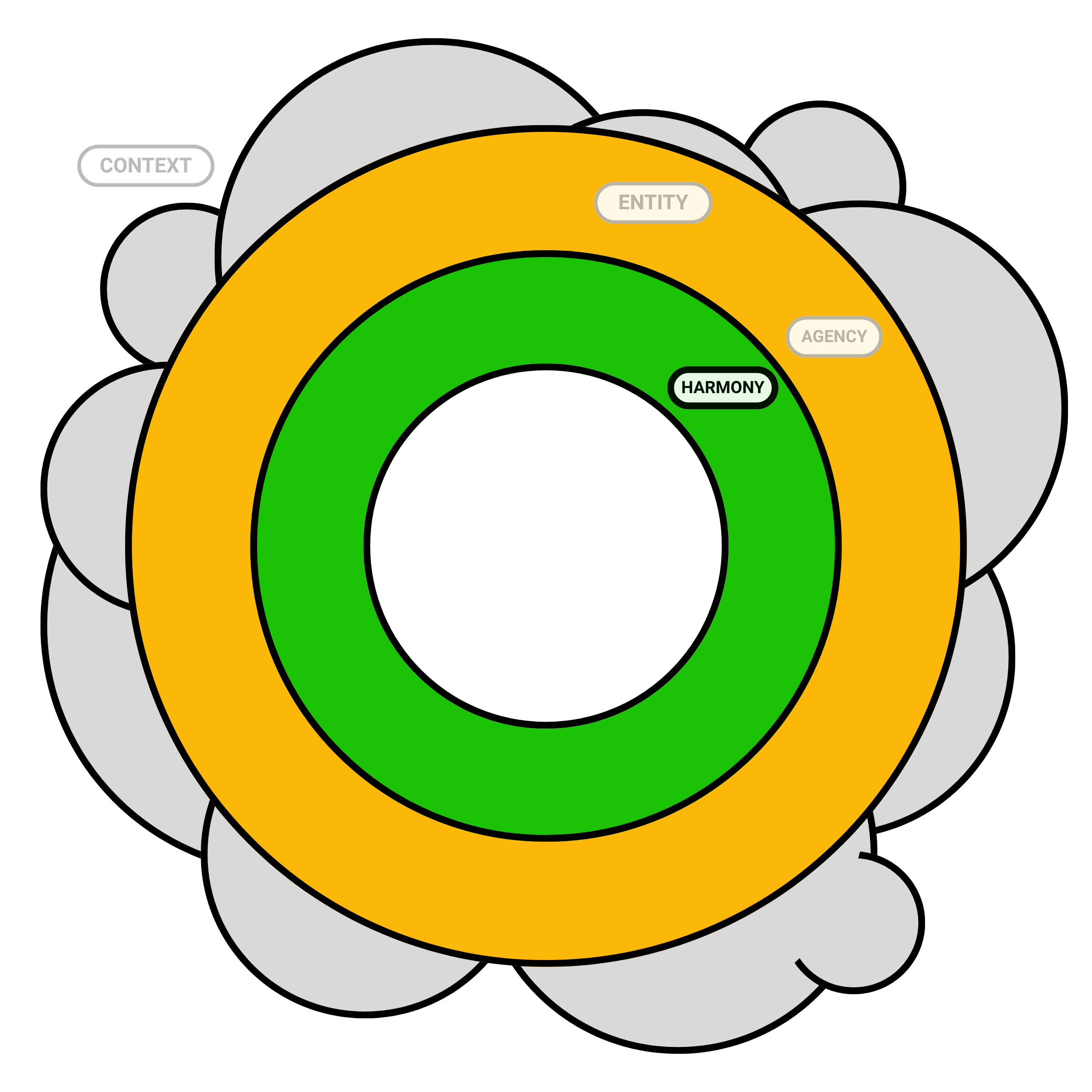
The harmony function exists so that the parts don’t get in each other’s way. Alternative terms leading thinkers in organization design use are coordination, self-organization, and synchronization. We can think of stand-up meetings, team agreements, chat channels, shared protocols, coding standards, and much more. Anything that the parts do themselves to help each other be effective, and not block each other’s productivity, counts as self-organized harmony work.
Note: You might wonder, where are the parts in the diagram? Well, that’s easy: each part is in itself an entire unit. The model is recursive. The higher levels and lower levels look the same as the one we’re looking at now, with exactly the same functions. I’m sure Mondrian would scold me when I tried to draw a three-dimensional, multi-level fractal structure. “When each level looks the same, show only one,” he would undoubtedly say. And so, that’s what I did. (We’ll discuss the recursive nature of the picture some other time.)
Note the peer-to-peer self-organization in the harmony function. This is family members agreeing on whose turn it is to walk the dog. It’s multiple AI agents sharing a protocol/context so they don’t duplicate work or collide. And it is two or more countries negotiating a bilateral or multilateral agreement. In the harmony function, the only constraints are those that the parts willingly negotiate among themselves.
Economy: Optimization of the Whole
It takes just a stroll through my neighborhood, observing the litter in the streets, the graffiti on the walls, and the damage inflicted on other people’s properties to see that self-organization is not the holy grail of governance.
The third function to discuss is what many people would refer to as governance or management (though the term management doesn’t sit well with me because the activities in the other functions are also managed). A better targeted word I found is economy, because the goal of this function is all about the control and optimization that an organization needs to improve the cooperation between the parts and derive economic value from their collaboration. After all, if the whole does not generate more value than the sum of its parts, there is no point collaborating as one entity.
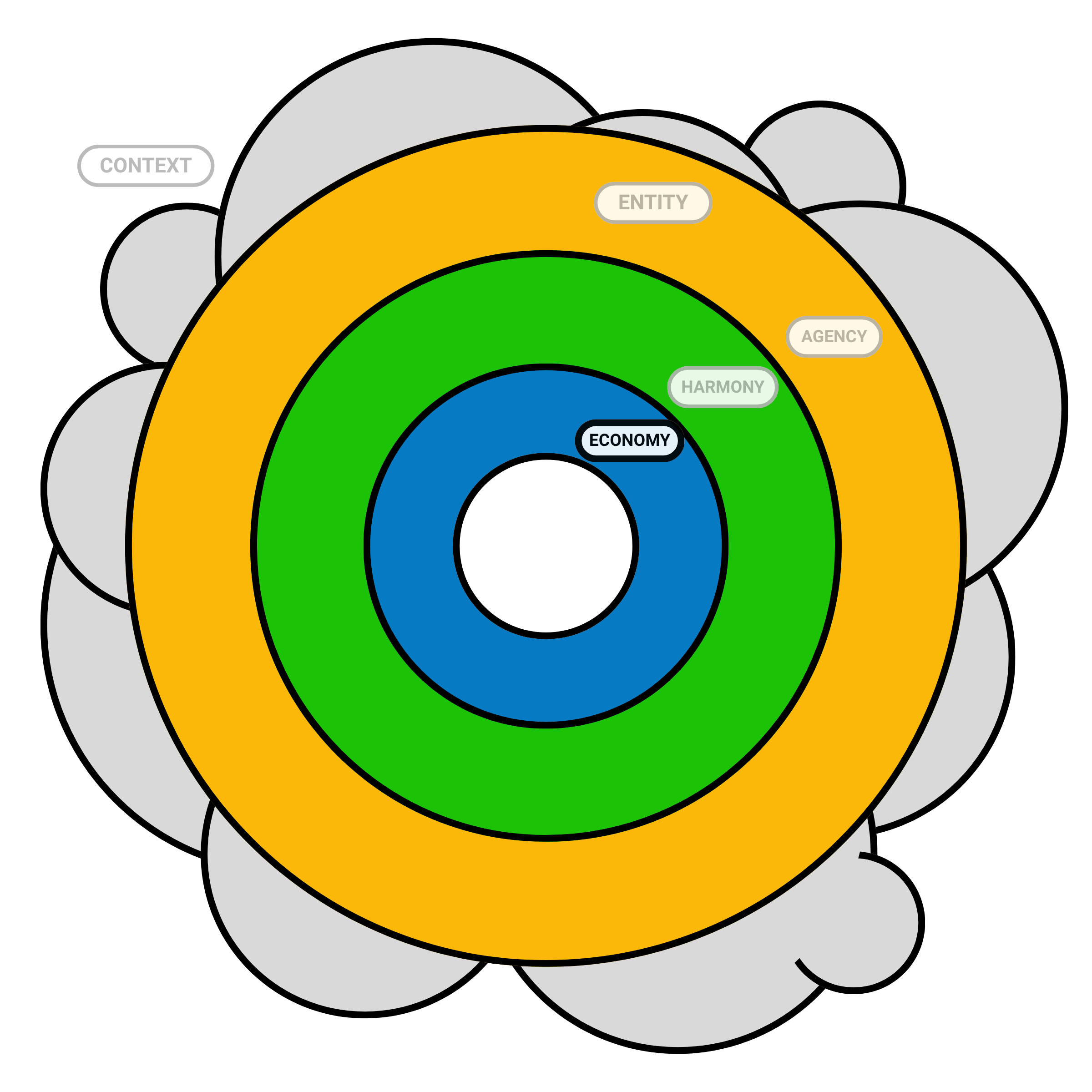
As an example, we can consider the rule that at least two team members must remain available to answer client calls during the holidays, even though everyone would rather remain disconnected from their work. We see a budget, rate limit, or guardrail that stops AI agents optimizing locally at the organization’s expense. We see the requirement that players on a football team must wear the sponsor’s T-shirt whenever the media are filming. And the Maastricht Treaty, decreeing that EU deficits should not get higher than 3% of GDP, is another example of a purely economic function that aims to benefit the whole.
As I once wrote in my book Management 3.0, self-organization without hard constraints is equal to anarchy. Even assuming everyone’s best intentions and the power of self-organization, societies need laws, families need rules, and organizations need policies. The fewer the better, but some are essential to optimize the whole for the benefit of all. You don’t want your company to look like my local park the morning after a King’s Day celebration.
I’m a founder, intrapreneur, and former CIO who helps leaders diagnose and redesign their operating models for the age of AI—informed by plenty of scar tissue. This five-function model is the same lens I bring into talks, workshops, and coaching, from a single team to a multinational. Want it applied to yours? Let’s talk. And if you’re just here for the maps, they’re free, always.
Strategy: Adaptation Through Intelligence
The fourth function of every entity, no matter if we’re talking individuals, teams, departments, organizations, or entire nation-states, is the awareness of what happens in the environment and the adaptation to new information when necessary. You may use words such as agility or intelligence, and I would be the last to object. My point is that the entity needs to look outward and forward. The combination of reaching out into the environment, understanding what is likely to happen, and coming up with an appropriate response is what many of us would call strategy.
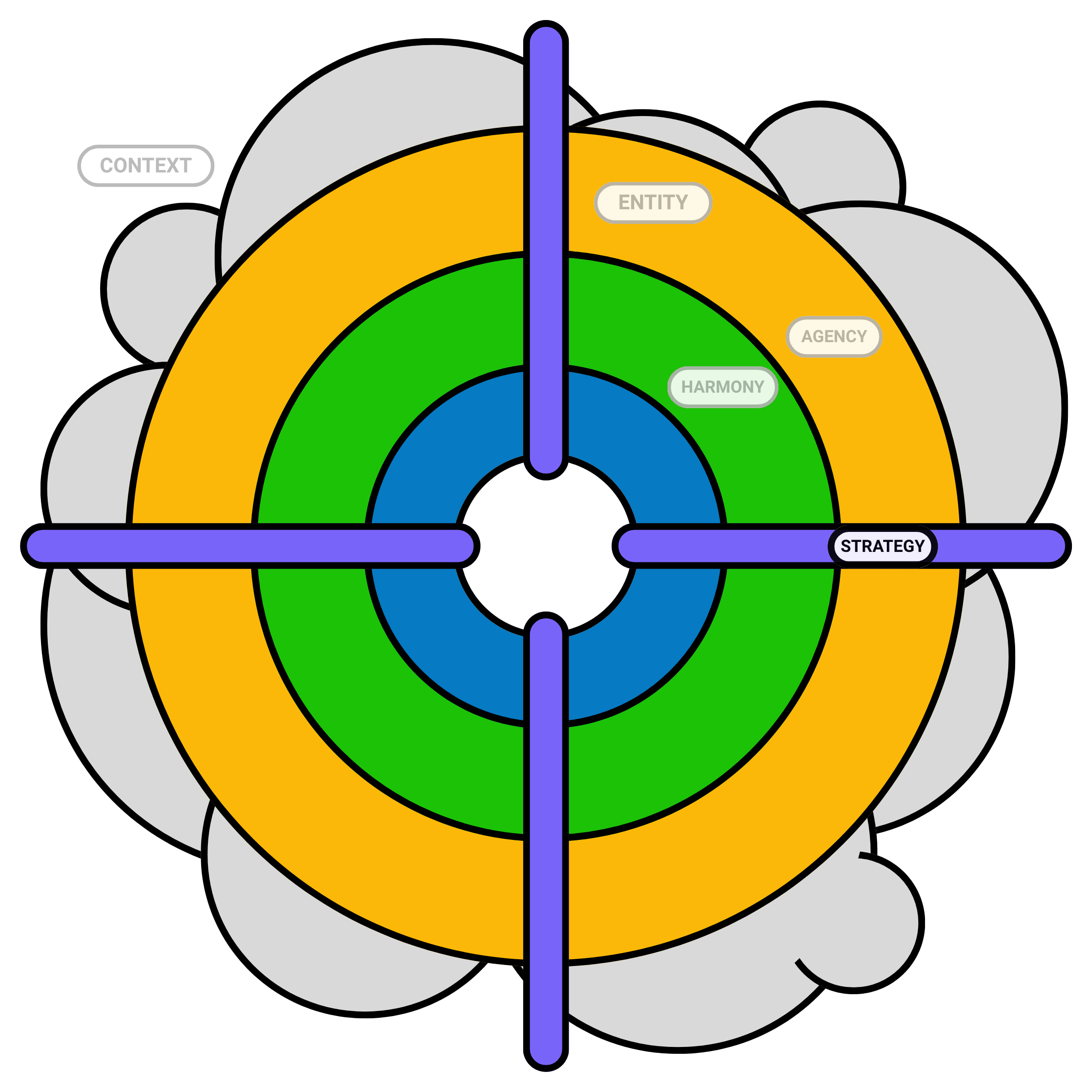
As an example, we can consider a bunch of AI agents scanning market trends on TikTok and other social media. We can consider a marketing team in a discovery phase with a focus group or a Board of Directors on an off-site to discuss their organization’s future. We can also recognize the strategy function in an agile team when they not only talk with their current client but also scout the market to see why their non-customers are not using their product.
I intentionally drew the strategy function as a pair of cross-hairs to show that it cuts straight through the other functions and taps directly into the known and unknown parts of the environment. The fact that I spent weeks researching ideas and experimenting with designs is an example of pure strategy: it’s because I believe companies need a concrete approach to evolve towards networked agentic organizations.
Identity: Cohesion Through Alignment
Last but not least, the entity needs the identity function to maintain cohesion across its system. What we see here are the alignment policies set in a central place that apply to the whole.
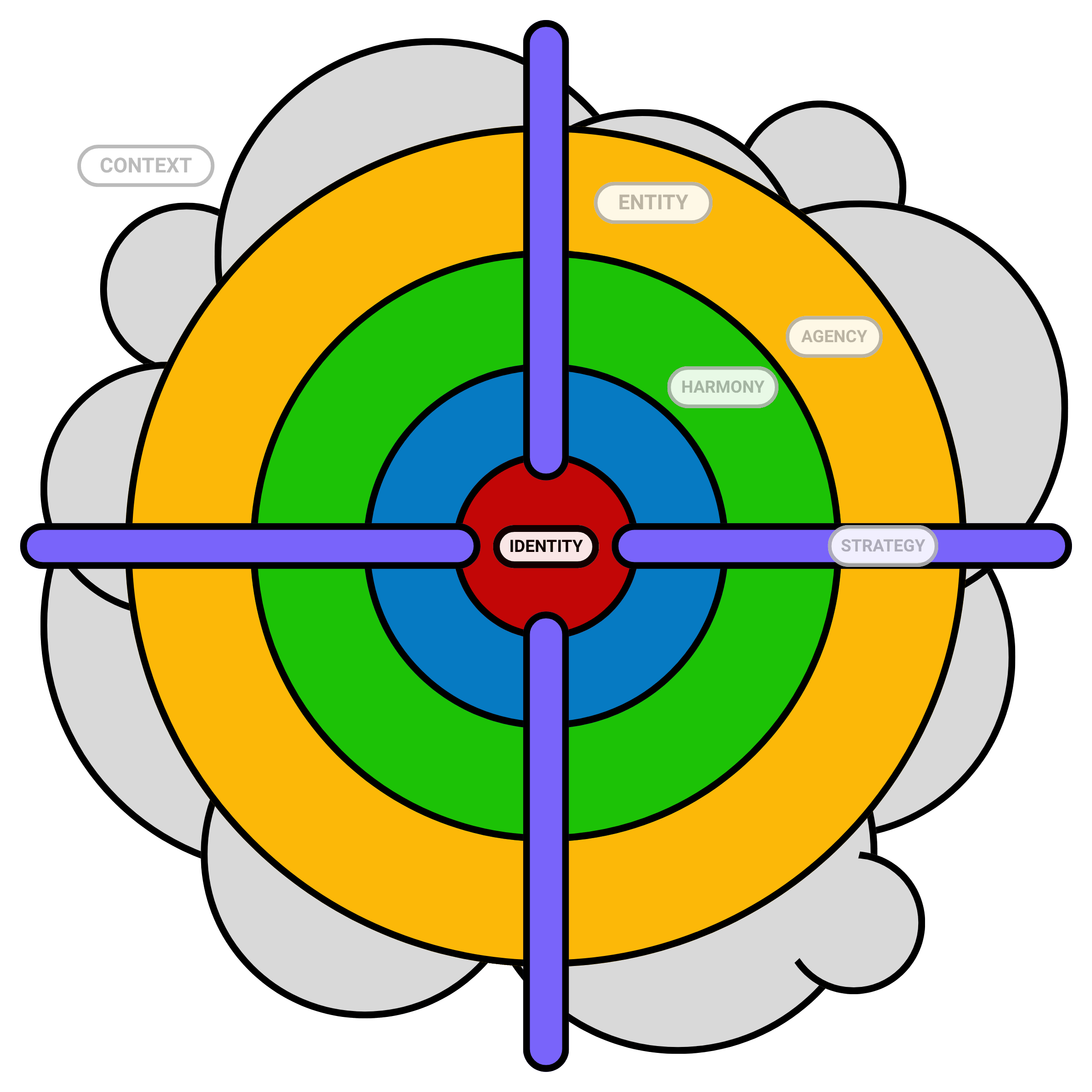
The identity of an entity is the name of a business unit, the purpose of a charity organization, the vision of an Olympic athlete, or the mission of a military platoon. It is also the system prompt / constitution / encoded values that keep agents from going rogue. In the identity function, we may recognize an organization’s values when they are not only printed on posters but actually enforced through recruitment and selection interviews and annual performance appraisals.
A warning about the picture: the center is not the top. These are five different jobs, not five rungs on a ladder. Identity sits in the middle because everything must stay aligned with it, not because it gives orders to the rest.
The title, tagline, and About page of my Substack publication that I’ve repeatedly agonized over with Claude and ChatGPT? That’s pure identity work. Without a shared identity, the parts have too little incentive to move in the same direction. The European Union is quite familiar with the challenge.
The Promise of Clarity
And that concludes the new visual: it is the simplest visual of a standard operational model and diagnostic tool that helps us evaluate how a team, department, business unit, or organization can stay viable and thrive in a fast-changing environment.
Note: Whether a single person or agent is truly ‘viable’ on its own is a debate I’ll happily have another day (for now, what matters is that the same five functions show up at every scale).
I use this new visual to diagnose organization designs and operational models for my clients. It is my improved mental model to understand what’s happening and where things should improve. With this model in hand, I can ask many questions:
How are your people, teams, and AI agents distributed across the five functions? Who does what, how, and when? And what is the evidence that it works?
What does your current agile method or framework actually do for you? Where are the overlaps with this diagnostic model? More importantly, where are the gaps?
How do the five functions and the various contexts influence each other? Which communication channels is everyone using? And where is intelligence building up?
How are upward and downward collaborations implemented across recursive levels? How do the parts impact the whole, and how does the whole manage the parts?
What is the Current Operational Model (COM), the Target Operating Model (TOM), and how do we get from here to there?
And only when we discuss a concrete department or business unit, we annotate the standard model with just enough insights to clarify our diagnosis.
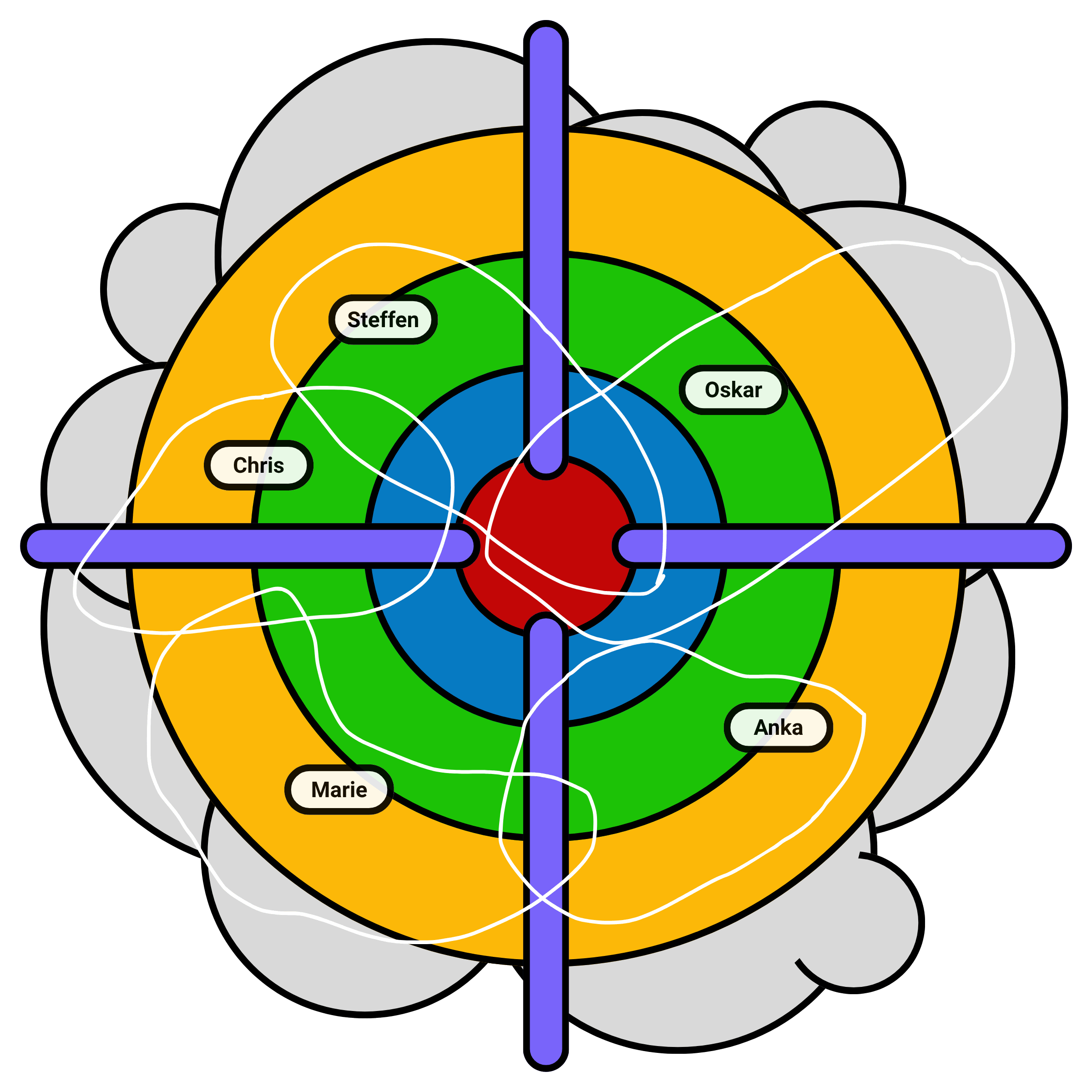
Note: You may have noticed that my new visual looks suspiciously like a radar or dartboard. This is by design. It is exactly the association I want people to make when they discuss their ways of working.
The Viable System Model, Fifty Years Later
I told you at the start that someone got here first. It’s time to give credit where credit is due. What I described in this post is basically the Viable System Model as published by Stafford Beer in his book Brain of the Firm in 1972. Among systems thinkers, it’s still the most rigorous organizational model we have (and yes, I know how that sounds coming right after I told you to distrust old methods and frameworks).
The problem with the Viable System Model is that its visuals and language look incredibly technical and complicated. A quick glance at a standard VSM picture triggers a strong déjà vu of my meter box closet downstairs. And this makes Miffy very sad.

Not surprisingly, Stafford Beer’s intricate designs never caught on in mainstream management literature, which is a pity because he was decades ahead of his time. The funny thing is that those who nowadays create agentic models for working with AI agents are re-inventing what Beer already explained over fifty years ago.
(Have you seen the explanations for creating one root claude.md in Claude Cowork that encodes your principles, working agreements, and brand voice for your AI agents? Yeah, that’s people discovering they need Harmony and Identity functions. We knew that fifty years ago already. Managing intelligence doesn’t differ much between biological and digital systems. It’s time for the VSM to make a comeback.)
Now, I’m pretty sure that some systems thinkers will clutch their pearls and cry heresy while pointing at my visual and say, “That does not look like a proper viable system model!” And they would be right! They would be right in the same way that biologists would be right when they look at Miffy and say, “That doesn’t look like a proper rabbit!” They would also be missing the point of simplification for a target audience.
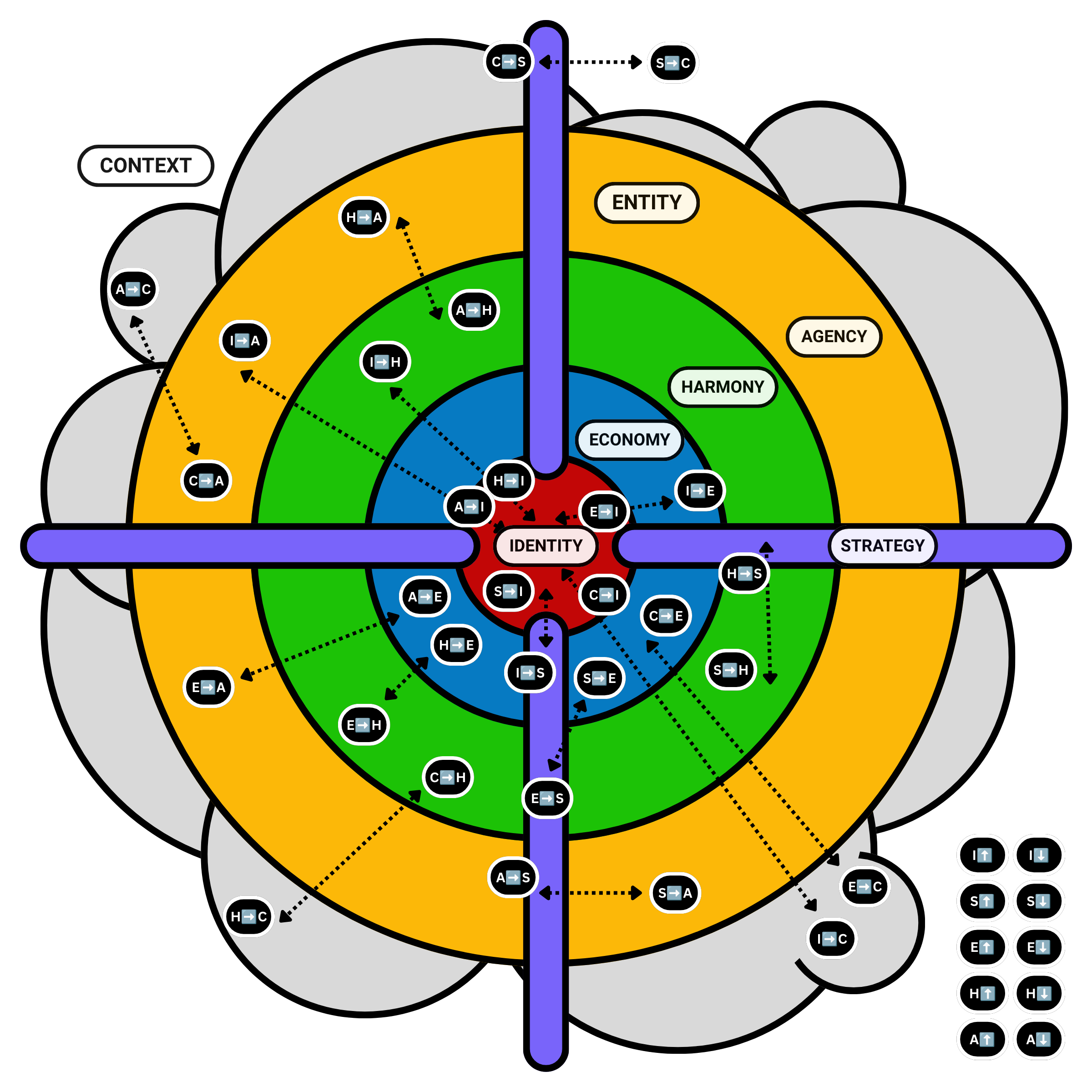
For example, I ignored (for now) the alarm channel (Stafford Beer called it the ‘algedonic’ signal) that lets a scream of pain bypass entire layers and reach the top of the organization instantly. I ignored (for now) what systems thinkers call System 3* which is the subfunction that allows the Economy function to see directly what’s happening in the Agency function. And I ignored (for now) the fractal nature of the model, connecting lower-level entities with higher-level layers. I’ve hidden all these details while also simplifying most of the language. You won’t easily hear me discuss variety attenuators or recursive metasystems. Miffy doesn’t mind.
In this post, and the posts that will soon follow, my goal is not to be a scientist nor a systems thinker.
My aim is to be an artist and a storyteller.
I’m sure that Miffy approves.
Jurgen, Solo Chief
P.S. Which of the five functions is most broken in your organization right now?


THIS Is What Comes After "Agile Is Dead"

In the Future of Work, Agile Agents Are the New Agile Frameworks.
Really loved seeing this. The fact that Beer published this in 1972 and people are independently rediscovering it while building agentic AI systems is the strongest possible proof that it's durable.
The moment I discovered VSM, it hit me, this is the cybernetic key to unlocking scaling agility in the AI era.
Your artful simplicity is what could finally make it click for the agile community at large.
Can't wait for the sequel Jurgen ♥️