

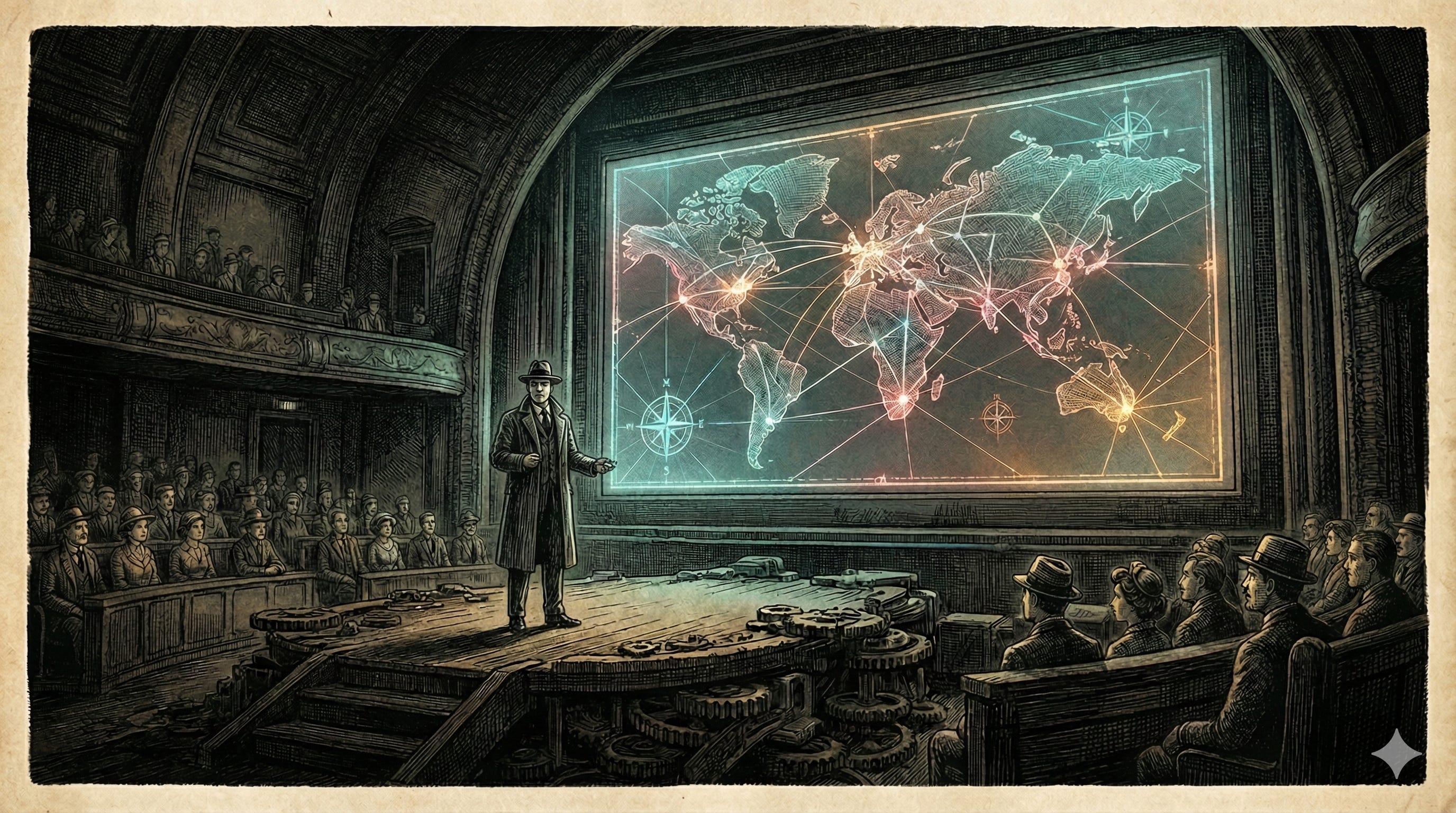
AI can generate a slide deck in seconds. But who wants to sit through that slop?
In the age of AI, building a quality keynote takes longer, not shorter. Strategic orchestration beats automation. Here’s what three days of work looks like.
So, what does it take to build a keynote when you’re the only person accountable for every decision … from storyline to slide design to stage delivery? I could fire up Gamma, Canva, GenPPT, or Prezi AI and generate an entire slide deck in seconds. The technology exists. The button is right there.
But who wants to sit through that crap?
Not me. Not you. Not anyone who values their time.
My new keynote flips the script from agility (responding to change) to viability (building something that survives AI disruption). If you’re the single wringable neck at your organization, this talk is for you. Interested? Contact me.
AI-generated slide decks exist for AI-powered summarizers. The only audience is bots and algorithms, same as those SEO meta descriptions nobody reads but everyone generates for search engines. Sure, it’s all technically English. But it’s written by machines for machines. Humans are just there to press a button.
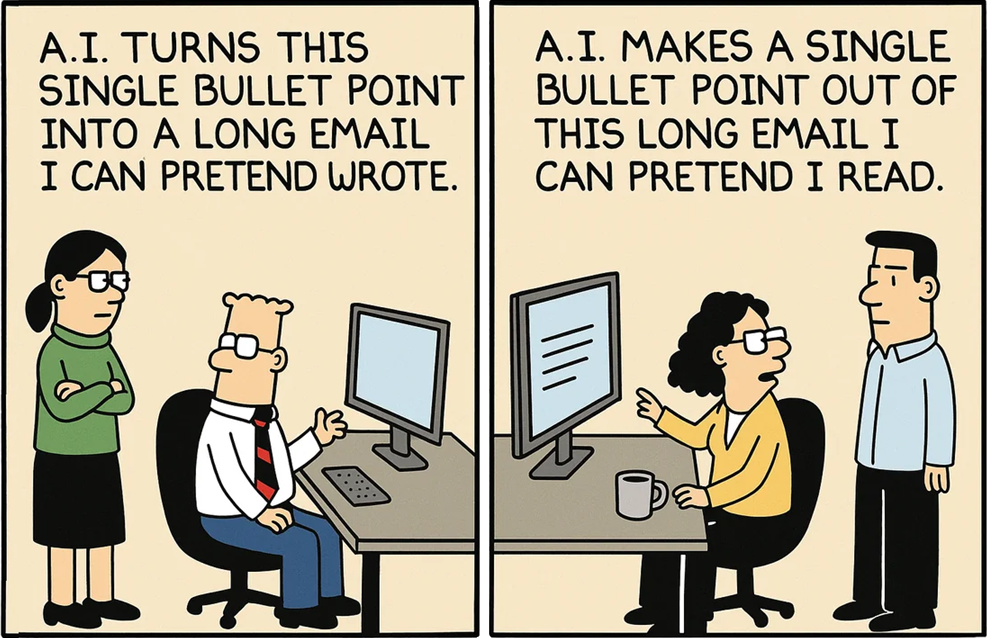
This is also why building a keynote solo is both terrifying and clarifying. There’s no committee to dilute the message. No design team to blame for ugly slides. Every choice is yours, every risk is yours. The single wringable neck extends all the way to the stage.
There’s no committee to dilute the message. No design team to blame for ugly slides. Every choice is yours, every risk is yours.
Entertaining actual humans for 45 or 60 minutes requires more than a prompt and a Generate button. So I spend days designing my talks. The newest one is titled From Agility to Viability: What AI Means for Leaders and Teams. Here’s what went into it:
AI Deep Dives, Then Double-Checks
Research comes first. I know, it’s shocking.
I use the Deep Research features of Perplexity, ChatGPT, and Gemini. Then I double-check everything (or I pit the LLMs against each other) because you should never rely on the output of a single AI.
No shortcuts here. If I skip research, I end up with confident nonsense wrapped in pretty templates.
The Story Outline
Getting the story right is everything, especially when there’s no team to catch what you miss. I consider myself a storyteller (I even wrote an entire novel), so I care about arc and flow more than most other speakers I know.
I created an outline in Google Drive and asked Claude to criticize it. Claude and I went through my Substack archive to find the best insights and quotes. We added them to the outline, then argued about placement until everything landed where it belonged.
And if it didn’t fit in one hour, it didn’t make the cut.
Beyond PowerPoint Templates
Standard PowerPoint templates are the purpose pollution of keynote design. Death by bullet points and clip art.
I talked with Claude about the impression I wanted to convey. We landed on showing the emergence of socio-technical structures (organic systems meeting technological growth). Claude helped me write a prompt for creating techno-organic slide backgrounds with Nano Banana Pro. Each image needed space to display a quote, insight, or graphic without feeling cramped.
I used the template to create a gem in Gemini that generates dozens of these visuals on demand.
I’m a founder, intrapreneur, and former CIO rethinking governance for the one-person business, navigating sole accountability in the age of intelligent machines—informed by plenty of scar tissue. All posts are free, always. Paying supporters keep it that way (and get a full-color PDF of my book Human Robot Agent plus other monthly extras as a thank-you)—for just one café latte per month.
The Presentation Content
Now comes the part where orchestration matters most: every slide needs to earn its place. The goal is to give the audience something worth photographing at every major beat—because if the insight doesn’t stick without you on stage to explain it, it wasn’t an insight. And I learned this the hard way years ago: never cram a slide with text. The story of a keynote should be spoken out loud, not written on a screen. The slide highlights the main point. Everything else goes in the presenter’s notes where it belongs.
The goal is to give the audience something worth photographing at every major beat.
When a graph or video actually supports the story, show it. When it doesn’t, cut it.
AI-Generated Animations (Optional)
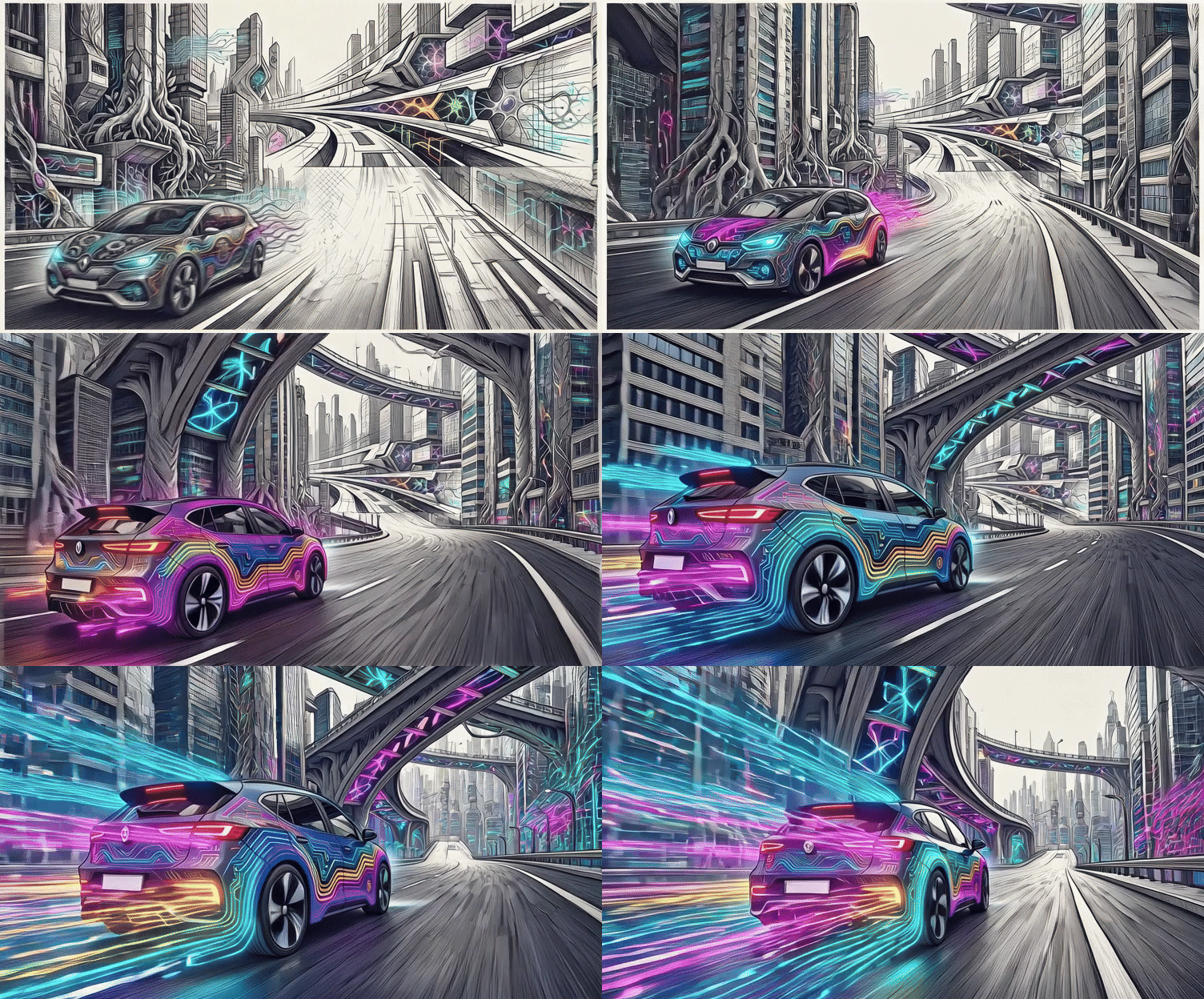
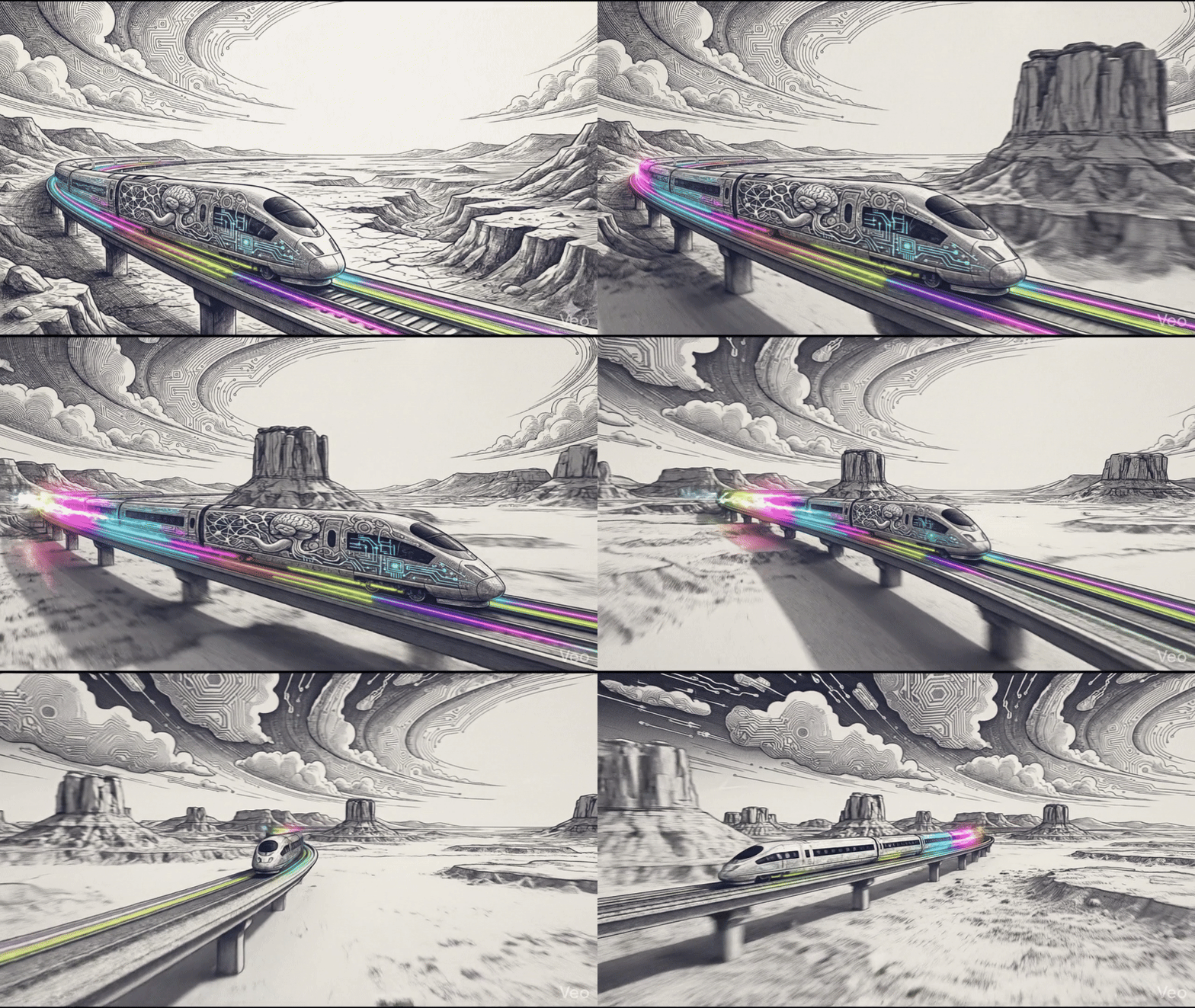
I don’t always bother with this step, but when there’s room it’s fun to make things more dynamic. For this keynote I experimented with xAI’s Grok and Google’s Veo to turn my static visuals into five-second animated transitions.
Sometimes these animations looked great. Other times they were absurdly funny. I left them all in anyway as a demonstration of how far AI-generated video has come in the last twelve months. Also, because chaos is where the interesting signals live.
The Test Audience
I’ll be honest: the first time I do any presentation for a live audience, it kinda sucks.
Only then do the signals come in. And most of them tell me I must do better. The middle section drags. The last section gets squeezed. A video refuses to run. Some jokes land weird. Part of the message doesn’t carry despite everything looking perfect in the outline.
Writers have proofreaders. Software has quality assurance. Keynote speakers have test audiences. The signals from a live audience hit differently than the signals from Claude. AI tells you what’s structurally wrong. Humans tell you what doesn’t move them. You need both feedback loops, and the judgment to know which one to trust.
Last Monday’s Crosscompany meetup at KLM gave me a long to-do list. This is good. You can’t fix what you haven’t broken.
From Agility to Viability: What AI Means for Leaders and Teams [Keynote by Jurgen Appelo]
Abstract
AI is exposing the limits of every organizational model we once believed in. Agile accelerated teams but largely ignored technology. AI accelerates technology but routinely ignores people. This keynote reconnects both through the lens of socio-technical systems. It explains why agile scaling frameworks only solved parts of the problem and why systems thinking matters more than ever. From solopreneurs to frontier firms, we explore agentic AI, adaptive swarms, and networked agentic organizations. The result is a practical way to design viable organizations where human judgment and machine intelligence evolve together—orchestrated by the Solo Chief.
If this sounds like a talk your conference, leadership team, or community needs, let’s talk. I’m booking keynotes for 2026. Contact me.
Why AI Presentations Take More Work, Not Less
My new keynote has cost me three to four days so far: researching, outlining, visualizing, animating, testing. That’s about the same as every previous keynote I’ve built.
But here’s the difference: the quality has gone up.
Perplexity sharpens my research. Claude challenges my storylines. Gemini elevates the visuals. None of them save me time. All of them raise the bar. That’s the Solo Chief deal: you orchestrate everything, so everything gets better—or worse—depending on you.
Truth be told, I wasn’t satisfied with my performance last Monday. I can do better. I see the current version as a rough diamond. Plenty of work remains before it shines. But I can already tell that, when it does shine, it’s going to outshine everything that came before. Because each talk should be better than the last one. Otherwise, why bother?
The moral: instead of using AI to shave hours off your day, you can use it to deliver your best work ever.
Your audience deserves it. And if you’re the one standing on that stage alone, so do you.
Jurgen, Solo Chief
P.S. What’s one keynote you’ve seen that raised your expectations for every talk since?
Don't Rely on AI Benchmarks. Do Your Own Testing. Like I Did.

Never trust AI benchmarks! They don't measure what's most important to you. Instead, devise your own AI test with an actual job that costs you a lot of time. In my case, creating book lists.
Let's Start from Scratch: Organizational Design in the Age of AI

With the community-driven Harmony Pattern Language, we can offer a new path for designing viable hybrid teams that can thrive in our AI-driven future.
Map of 15 Story Structures: A Writer's Guide to Narrative Frameworks

Welcome to my explorations at the intersection of AI leadership, algorithmic management, and the future of work. In this age of AI, I focus on how networked and decentralized organizations can thrive with agentic AI, gig work models, and new approaches to AI management. If you're curious about the evolution of networked organization structures and the role of gig workers in tomorrow’s economy, you’re in the right place.
That was an intersting read. We do the same things on the same subjects.
The differences are:
My self made visuals were always horrible… PowerPoint smart art… now they are gorgeous although I daresay yours are better still
My content always came from my books… but books by their nature are static, so im using up to the second research now as well as longer lived ideas (such as change agility) which we see differently
But a really good deck takes a week but I get to spend more time on thought rather than on making slides