

You’re not drowning in complexity because you’re lazy. You’re drowning because you’re responsible for everything. There’s a new kind of tool that might help—and a very old trap that comes with it.
This article is brought to you by Atoms, the first paying sponsor of The Solo Chief.
I once believed software was my bottleneck. If I could write more code, I could rule the world!
I had a beautiful product. Good idea. Clever features. It worked. Nobody wanted it. Well, a few people wanted it. But not enough people to keep the lights on and my pride intact. (I was even awarded Entrepreneur of the Year once because I was good at conveying my vision. My colorful diagrams of expected revenues looked fabulous on paper.)
So when I look at a tool like Atoms—a platform that helps a solo founder move from idea to market research, product spec, build, and deployment, ending with a live, testable product—I see two things at once.
First, I see where solopreneurs are headed in the near future.
Second, many people are about to get drunk on the wrong thing.
Where We’re Headed
The future part is easy to recognize. A year ago, researchers at a major Chinese university showed that role-based AI agents could act like a fake software company—CEO, CTO, programmer, tester, reviewer—and spit out working apps in minutes for pocket change. Others proved these systems could read docs, write code, run tools, fix some of their own messes, and push things live.
The age of “code assistants” is already old news. We’re now in the age of small digital staff with no sleep cycle and no opinion about your branding.
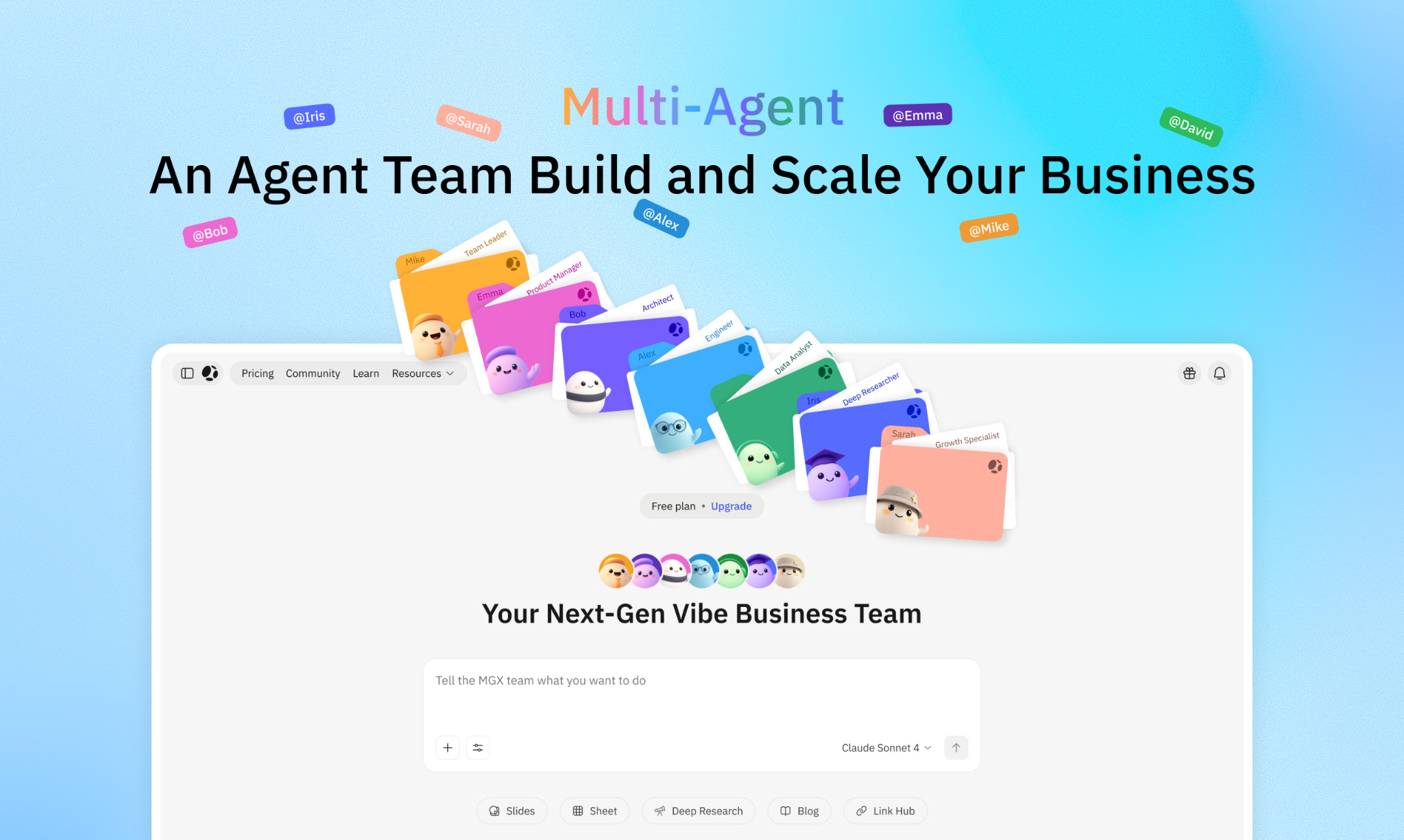
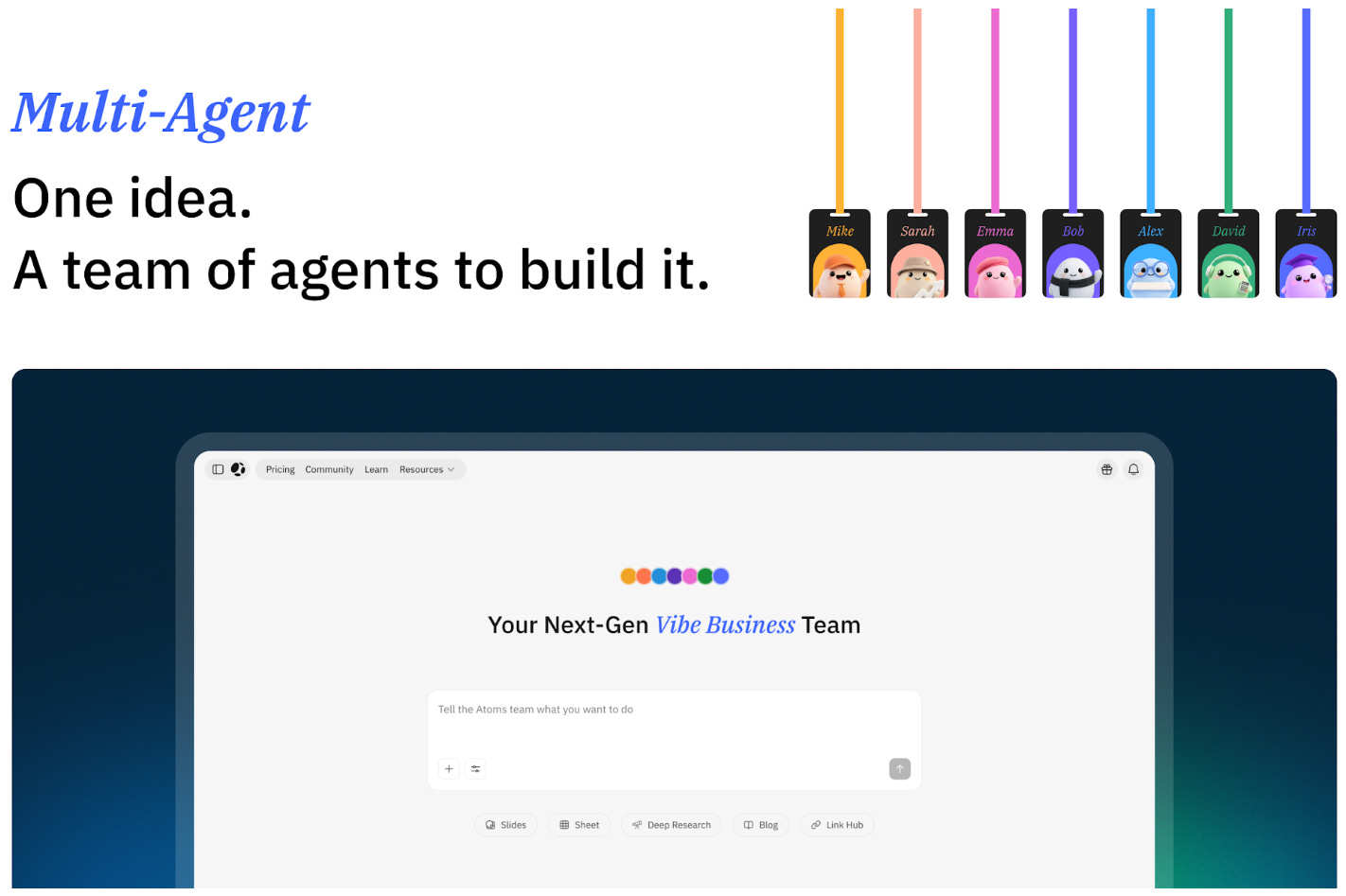
Atoms calls itself a “vibe business team,” and for once the marketing label earns its keep. Instead of handing you a code editor and wishing you luck, it gives you something closer to a small team you can talk to: a researcher who checks whether anyone actually wants your idea, a product manager who writes the spec, an architect, an engineer, and a coordinator who asks for your approval before making big moves. You describe what you want. The team builds it. You deploy.
For one person carrying the whole circus alone, that matters. The usual alternative is a sad little parade of freelancers, half-finished design files, one developer who disappears for ten days, and a payment setup that somehow becomes a spiritual crisis.
Solo operators don’t break because they’re lazy. They break because one calendar has to hold product decisions, customer calls, support emails, sales, invoices, bug reports, and whatever fire started while they were asleep. Eliyahu Goldratt’s Theory of Constraints applies here with embarrassing clarity: your business moves at the speed of its tightest choke point. For many solo chiefs, that choke point has been cross-functional execution.
A platform like Atoms that aims a cannon straight at that choke point is worth watching.
The Wrong Part of the Demo
Here’s where my eyebrow starts twitching. The phrase “fully functional business” gets thrown around on Substack like confetti at a wedding where nobody checked if the couple actually likes each other.
A live app isn’t a business. Those are different species. One can collect money. The other can create repeatable value for an actual customer who returns, refers, or at least doesn’t vanish after the free trial.
I know someone who built an entire business in public using an AI: it picked the niche, named the company, wrote the copy, and launched the whole thing with a human acting as its hands. The internet loved it. Revenue, however, remained stubbornly unimpressed. Activity everywhere, traction nowhere.
And then there’s the devious cloning problem. When building software becomes cheap, distribution becomes the knife fight. Some guy builds a successful AI product, and—poof!—a swarm of copycats throw up lookalikes almost overnight. Plenty of founders still talk as if the hard part is getting the app built. Cute.
The reliability gap is real but shrinking. Today’s AI agents still fumble on complex edge cases—authentication flows, billing recovery, security audits—the gnarly stuff that separates a minimal viable business from a scalable enterprise. But the trajectory matters more than the snapshot.
But that is the situation now. The AIs we have now are the worst we will ever have. The vision behind a platform like Atoms isn’t focused on now; it is built for tomorrow.
The Correct Job Description
This doesn’t kill the idea of a “vibe business team.” It points to the correct job description.
The promise of a platform like Atoms is the “agentic business team.” The reality (for now) is more “business and product experiments for solo businesses launching digital products.” Much like vibe coding was intended for software experiments, a vibe business is intended for business experiments. And that’s still a big deal. That’s the valuable version. If I’m a solo founder, I don’t need a machine to replace my judgment. I need one to spare me from stitching together hosting, UI, login, database calls, webhooks, deep research, data analytics, and the other fiddly nonsense that eats entire weeks and gives very little back.
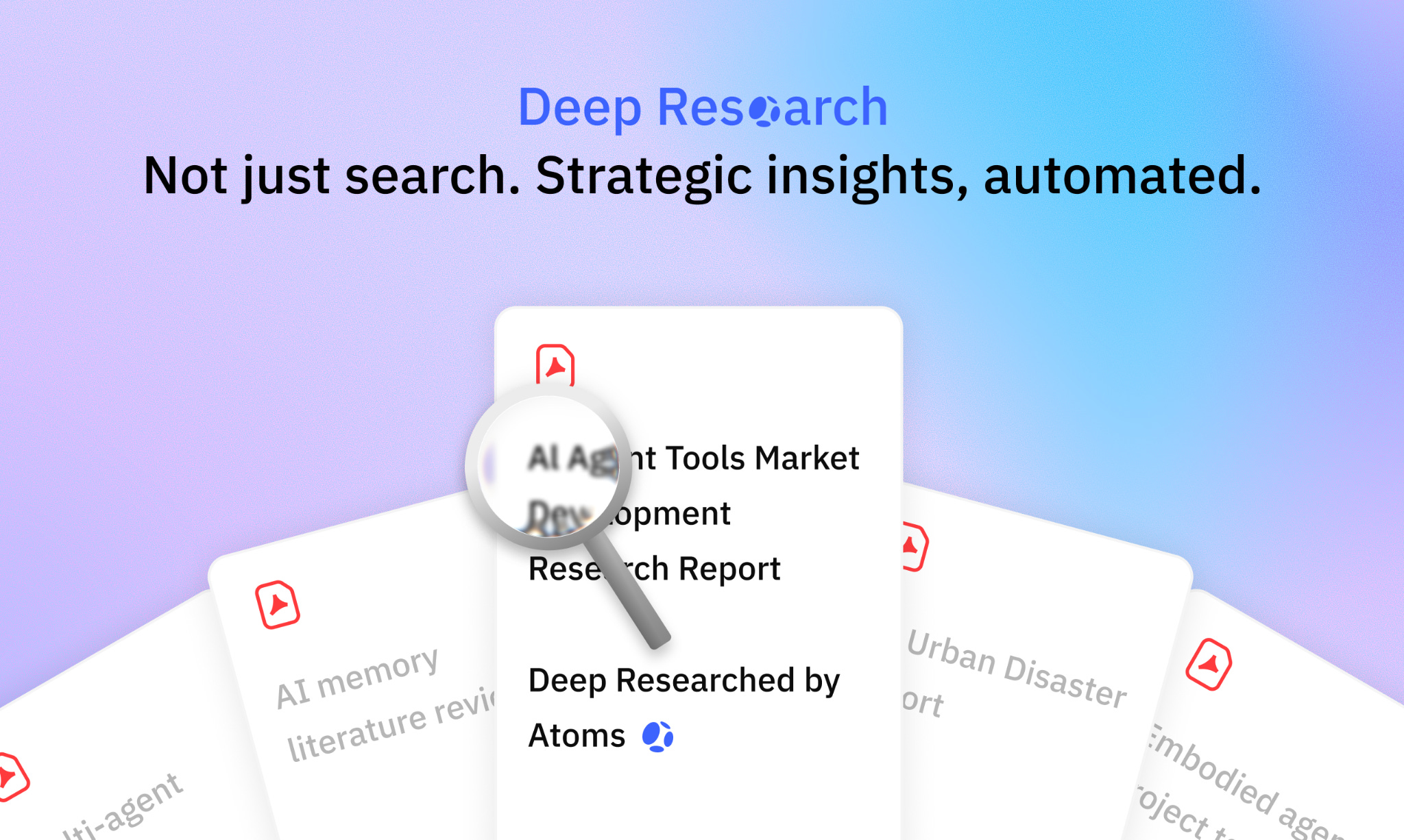
What Atoms gets right—and what makes me think they’re onto something real—is starting with market research before a single line of code gets written. Their deep research agent analyzes demand, competitors, and niches before the builder agents fire up. That’s exactly the opposite of how most of these platforms work, and exactly the right order for a solo chief who can’t afford to burn months on something nobody wants.
(I know this because I burned months on something nobody wanted.)
The full sequence matters here. Research first, then spec, then build, then deploy with payments and auth already wired in. For a non-technical founder, that’s the difference between a product idea that sits in a notebook for six months and one that’s live and testable next week. You don’t need to know how authentication works. You need to know whether customers will pay. Atoms handles the first part so you can focus on the second.
Atoms also lets you export all generated code to GitHub, which means no lock-in if you outgrow the platform. That’s the kind of decision that makes me trust a company more than any marketing claim. (It’s why I’m on Substack in the first place. I can leave whenever I want and take my subscriber list with me, which is exactly why I’m staying right where I am.)
Management Changes When the Workers Change
Here’s the part that makes my brain itch. With human teams, management often means alignment, incentives, conflict, coaching, politics, hiring, firing, and trying to decipher what somebody meant in that Slack message with just a thumbs-up.
With AI agents, much of management turns into prompt design, boundary setting, quality checks, sequencing, and deciding where human review must stay in the loop because the machine has zero skin in the game. If the payments fail, the bot shrugs. If a privacy leak ruins your name, the bot slurps up another stream of tokens and calls it a day.
That’s why systems thinker Norbert Wiener’s old warning still matters. I’m paraphrasing, but here’s the gist: if you use a mechanical agency whose operation you can’t efficiently interfere with once you’ve started it, you had better be sure that the purpose you put into the machine is the purpose you actually desire.
Melvin Conway’s law lurks here too, even though Conway didn’t have agent swarms in mind. Your product resembles the communication structure of whatever built it. A solo founder with a team of AI specialists will build and ship differently from a founder with a designer, a salesperson, and a technical cofounder. Faster, probably. Cleaner in some places. Flimsier in others.
The garden grows in the shape of the gardener’s tools.
So, Is This the Future of Management?
For software-first solo businesses, yes. Enough that dismissing it would be silly.
The solopreneurs of the near future won’t spend all day coordinating departments. They’ll orchestrate a weird hybrid shop: a human chooses the market, the promise, the tradeoffs, the taste, the risks worth taking. A swarm of machines turns that intent into code, screens, tests, and stuff deployed at unnatural speed.
That lowers the cost of trying things. It shortens the time between idea generation and payment collection. It gives one-person businesses a kind of temporary organization without all the payroll, all the status games, all the “quick sync?” messages and stand-up meetings that somehow breed like rabbits.
Still, the oldest law in business survives untouched: if nobody wants what you’ve built, your stack doesn’t matter.
The future of management is becoming the art of knowing what parts of the business can be handed to tireless interns made of algorithms—and what parts still require a human who can smell demand before the invoice bounces.
Atoms seems well-positioned for this exciting future.
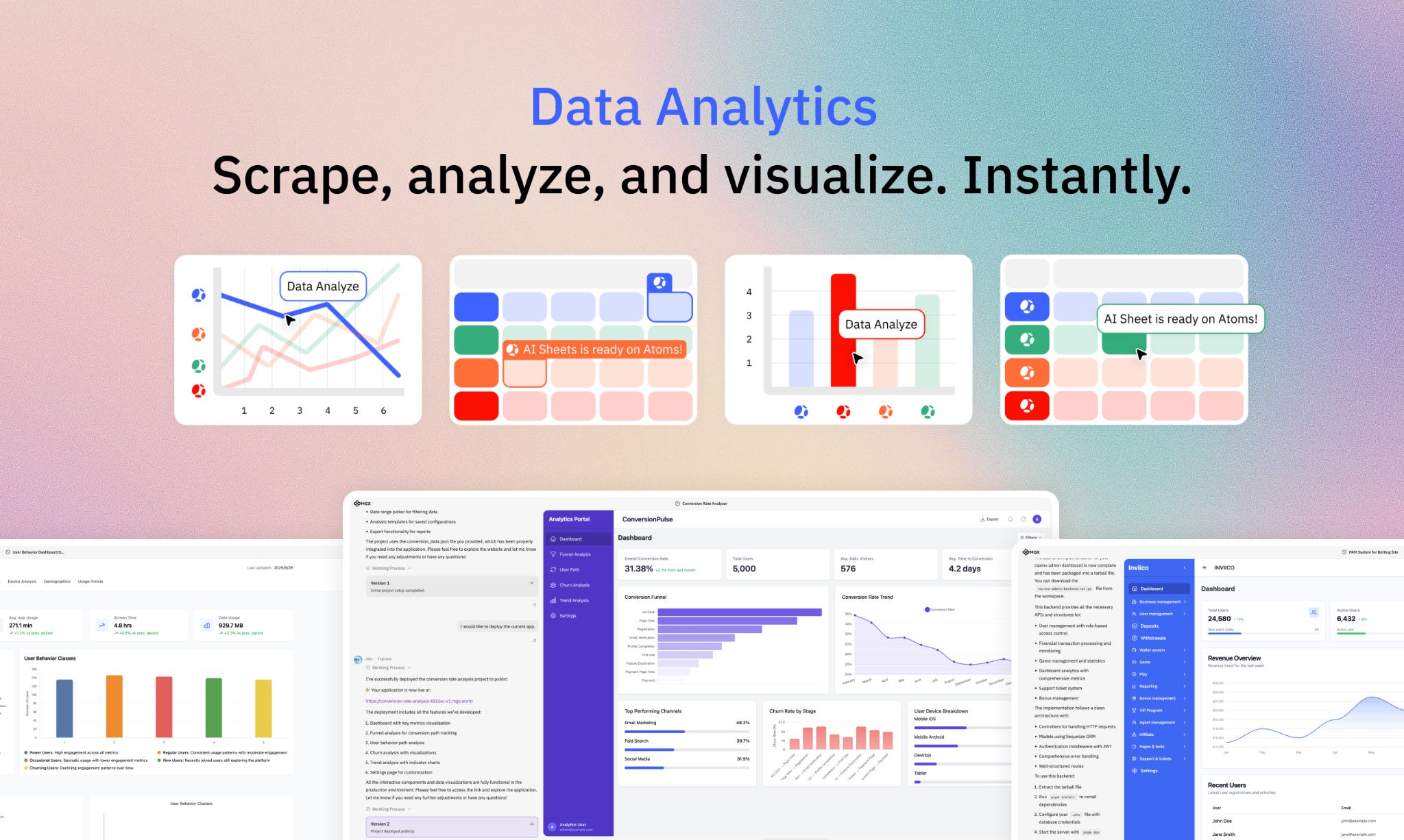
Atoms is a vibe business team that turns your ideas into businesses. It researches your market, designs the product, builds the frontend and backend, connects authentication and payments, and ships a live app you can charge for—not just a prototype. That could be a simple SaaS MVP, a paid tool, or another small digital product you can actually launch and validate with real customers.
Why I Said Yes to This Sponsor
I want to be honest about the sponsorship for a moment.
Atoms approached me as a potential sponsor. I looked at their product, their background (the team behind MetaGPT, one of the most widely used open-source multi-agent frameworks), their pricing, and their design choices. I said yes for a specific reason: they’re building for the audience I write for. Solo founders. One-person businesses. People who carry the entire circus alone.
Is Atoms perfect? Probably not. It’s early-stage, and the output quality depends heavily on how clearly you describe what you want. (Welcome to working with AI in general.) As with most AI platforms, there’s a learning curve in using credits efficiently, especially when you’re still figuring out what you want to build.
But the direction matters more than the current polish. The fact that Atoms starts with market research before building, that they let you export your code, that they’re designed around the workflow of a solo operator rather than an engineering team—those are the right instincts.
I wouldn’t bet my entire business on any single AI platform today. But I would use one to test whether a business idea has legs before I invest months and money into building it the old way.
That’s the real use case. Not “replace your team.” Not “build a startup in five minutes.” Just: run the experiment. See if demand shows up. If it does, you’ve got something worth growing. If it doesn’t, you’ll have saved yourself six months of pretending a product is a business.
If you have an idea sitting in your notes app gathering dust while you tell yourself you’ll find a developer next month—you won’t find a developer next month. But you might find a customer if you run the experiment this week.
Jurgen, Solo Chief.